

The Holistic Eczema Guide

Updated: Apr 19
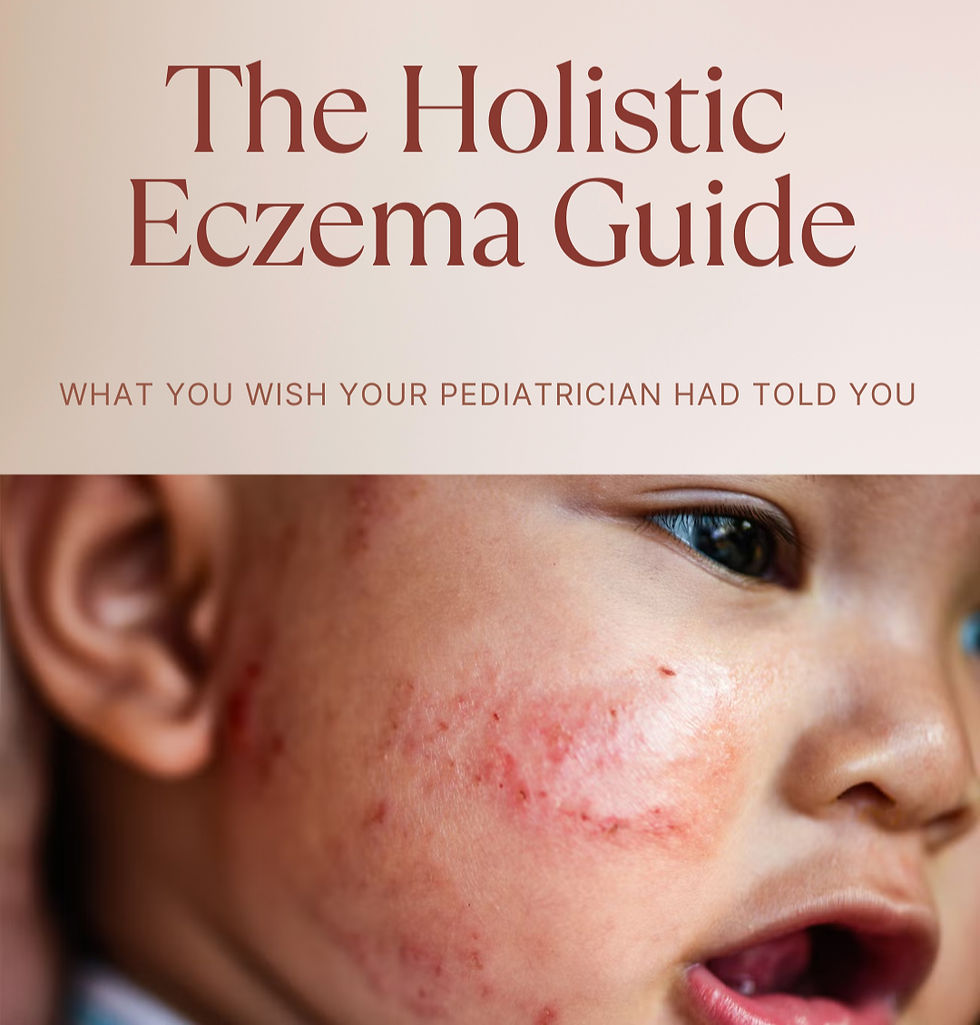
Eczema is one of the most common skin conditions in babies, children, and adults, yet it is also one of the most misunderstood. Many families are told it is simply “dry skin” or a genetic issue they will have to manage forever with steroid creams. Others are left frustrated when symptoms come and go without a clear explanation.
The truth is that eczema is not just a skin problem. It is often a visible sign of deeper imbalance in the body. Understanding what eczema actually represents can completely change how you approach healing.
What Is Eczema?
Eczema, also known as atopic dermatitis, is a chronic inflammatory skin condition. There are many different types including atopic dermatitis, contact dermatitis, dyshidrotic eczema, nummular eczema, and seborrheic & stasis dermatitis. It typically presents as red, dry, rough, itchy patches that may crack, ooze, or thicken over time. In babies, it often shows up on the cheeks, scalp (cradle cap), and folds of the arms or legs. In older children and adults, it is commonly seen behind the knees, inside the elbows, on the wrists, hands, neck, and face.
Eczema is not contagious. It is not caused by poor hygiene. And while genetics can play a role, genes alone do not explain why eczema rates have skyrocketed over the last few decades.
Why Is Eczema So Common Now?
Eczema affects 1/5 (20%) of children! This statistic has TRIPLES in the last 30 years!
The dramatic rise in eczema mirrors major changes in modern life. Increased chemical exposure, ultra-processed diets, antibiotic overuse, environmental toxins, disrupted gut microbiomes, and immune system dysregulation all contribute.
At its core, eczema is an inflammatory condition driven by immune imbalance and impaired skin barrier function. The skin becomes more permeable, allowing irritants, allergens, and microbes to penetrate more easily. This triggers an immune response, which leads to inflammation, itching, and flares.
Rather than asking, “What cream will make this go away?” a more helpful question is, “Why is my body expressing inflammation through the skin?”
We can only find true healing when we address the root cause.
Causes/Risk Factors of Eczema
Microbiome/Gut Imbalance (the most important)
Vaginal birth or C-section?
How soon was babies first bath?
Breastmilk or Formula?
What were babies first foods? Were they gut healing?
Antibiotics use, especially in early childhood
Parasitic infection?
Food Allergy/Sensitivity
Do flares occur after eating specific foods?
Any known allergies?
GI symptoms along with eczema flares?
Nutritional deficiencies?
Genetic/Epigenetics
Is there family history of eczema or autoimmune disease?
Vaccines/Medications
Any recent vaccines? Consider vaccines that contain yeast.
Any new medications including OTC?
Antibiotic use, especially in early childhood
Environmental
Do flares occur only in certain places?
Do symptoms improve/worsen when traveling?
Are there pets in the home?
Are you sensitive to mold, dust, fragrance, rubber, etc?
What are you putting directly on your skin? (soap, lotion, etc)
Is your environment over-sanitized?
The Gut–Skin Connection
One of the most important pieces of the eczema puzzle is the gut.
The gut and the skin are closely connected through the immune system. Roughly 70% of the immune system lives in the gut. When the gut lining becomes compromised, often referred to as increased intestinal permeability or “leaky gut,” inflammatory compounds and undigested food particles can enter the bloodstream. The immune system reacts, and the skin is one of the most common places that inflammation shows up.
Factors that can disrupt gut health include:
Antibiotic exposure, especially early in life
Highly processed foods and refined sugars
Food sensitivities
Chronic stress
Environmental toxins
Lack of beneficial gut bacteria
This is why topical treatments alone rarely resolve eczema long-term. If the root cause is internal, the skin will continue to signal distress until the underlying imbalance is addressed.
Common Triggers for Eczema Flares
Eczema triggers vary from person to person, but there are some common patterns.
Food triggers are frequently involved, especially in children. Common culprits include dairy, eggs, gluten, soy, corn, and artificial additives. This does not mean these foods are inherently bad for everyone, but for a sensitive immune system, they can contribute to inflammation.
Environmental triggers are another major factor. These may include:
Fragrance and scented products
Conventional laundry detergents and fabric softeners
Soaps and shampoos with harsh surfactants
Household cleaners
Synthetic fabrics
Chlorinated water
Mold
Weather and climate also play a role. Cold, dry air can worsen eczema by further drying the skin, while heat and sweat can aggravate itching and inflammation.
Stress is an often-overlooked trigger. The nervous system and immune system are deeply connected. Emotional stress can directly worsen eczema flares in both children and adults.
Parasites are something most parents never think about, yet many holistic practitioners believe that almost everyone carries some level of parasites, sometimes without obvious symptoms. These organisms can quietly disrupt the gut, interfere with nutrient absorption, and keep the immune system on high alert. When the immune system is constantly reacting, inflammation has to show up somewhere, and for many children, that place is the skin. This may help explain why eczema can be so persistent or why it doesn’t fully resolve even when diet and skincare are addressed. While parasites are often associated with travel or poor sanitation, low-grade exposure can happen through food, water, pets, and everyday environments. For families dealing with stubborn eczema, considering gut health and potential parasitic burden can be an important missing piece of the puzzle.
The Role of the Immune System
Eczema is associated with an overactive or misdirected immune response. In many cases, the immune system is stuck in a chronic inflammatory state, reacting to things that are not true threats. This explains why eczema often occurs alongside other inflammatory or allergic conditions, such as asthma, seasonal allergies, and food sensitivities.
Supporting immune regulation rather than suppressing symptoms is a key part of long-term healing. One important factor in supporting the immune system is the antioxidant glutathione. This antioxidant is so important in immune function but is very easily depleted when sick or when taking medications such as Tylenol.
There also is evidence that the immune system can become "hyperactive" when it is not stimulated enough. Post-Covid, there was a huge jump in cases of eczema and other autoimmune disorders which many believe are contributed to the increase in sanitation practices. By sanitizing everything, we are removing all of the bacteria (both good and bad!) that keeps our immune system working and functioning. While it makes sense to sanitize your house after a known illness to prevent others from catching it, it is not necessary to sanitize on a regular basis.
Rethinking Steroid Creams
Topical steroids are commonly prescribed for eczema, and in some situations they may provide short-term relief by suppressing inflammation. However, they do not address the underlying cause of eczema.
With repeated or prolonged use, steroid creams can thin the skin, disrupt the skin barrier further, and lead to rebound flares when discontinued. Often, withdrawing from a topical steroid after long-term use can be worse than the actual eczema itself. This can create a cycle where stronger medications are needed over time.
Natural Remedies:
Supporting the Skin Barrier Naturally
The skin barrier is your first line of defense. When it is compromised, moisture escapes and irritants enter more easily.
Supporting the skin barrier includes:
Using gentle, fragrance-free, non-foaming cleansers
Avoiding over-bathing
Applying thick, occlusive moisturizers while the skin is still damp
Choosing products with minimal ingredients
Ingredients such as tallow, shea butter, beeswax, and certain plant oils can help seal in moisture and protect the skin. Simpler is often better.
Here are some specific products I recommend for eczema-prone skin and to help alleviate flares:
Primally Pure Baby Balm : NMN10 for 10% off
Active Skin Repair: NWESCOTT for 10% off
Attitude body cream: this link gives 10% off
Gentle Tallow Co. : Natalie10 for 10% off
For bathing, try these tips:
Oatmeal bath
put organic oatmeal in a cheesecloth and place in bathwater
Breastmilk bath
just add breastmilk to the water
Limited bathing (you do not need to use soap every time either, especially for kids)
Cooler water (hot water can worsen flares)
Use a water filter
Nutrition
Food is foundational when it comes to inflammation. While there is no one-size-fits-all eczema diet, many families notice improvement when they focus on whole, nutrient-dense foods.
Key nutritional considerations include:
Adequate protein for skin repair
Healthy fats to support the skin barrier (wild-caught salmon, nuts & seeds, olive & coconut oil)
Minerals like zinc and magnesium
Vitamins A, D, and E
Reducing ultra-processed foods, artificial dyes, and refined sugars can significantly decrease inflammatory load.
Identify and remove specific food triggers. Food sensitivities can promote inflammation and trigger eczema. An elimination diet or testing is ideal in working to determine food triggers. For breastfed babies, mom should consider doing an elimination diet to help determine the baby's trigger.
Supporting Detox Pathways
The skin is one of the body’s detox organs. When other detox pathways, such as the liver and gut are overwhelmed, the skin often takes on more of the burden.
Supporting detoxification gently can include:
Ensuring regular bowel movements
Staying hydrated
Encouraging sweating through movement or warm baths
Rebounding (jumping on a trampoline)
Lymph massage
Liver castor oils packs
Reducing toxic exposures in food, water, and personal care products
Remove Environmental Toxins
Think about the chemical filled products that are in your house that you or your child is exposed to:
Choose non-toxic, fragrance-free detergent instead of conventional detergents
Branch Basics laundry detergent : Code Naturalmama for 15% off
Find organic, clean personal care products
Earthley: code natalie10off for 10% off
Soaps, skin care, lotions, hair care, and more!
Primally Pure : code NMN10 for 10% off
Skin care, lotions, balms, and more
Their Baby Balm is especially awesome for eczema!
Plant Therapy: this link gets you 15% off
Skin care, lotions, and more
Clothing and bedding made with natural fibers instead of polyester
Remove plastic and teflon from the kitchen
Caraway ceramic cookware: code natalie10off for 10% off
Use glass storage instead of plastic
Use wooden cooking utensils and cutting boards
A Whole-Body Approach to Healing
Eczema is a signal that your body is overloaded.
A whole-body approach looks at:
Gut health
Immune balance
Skin barrier integrity
Environmental exposures
Emotional and nervous system regulation
Healing is rarely linear. Flares may still happen, but over time they often become less intense and less frequent as the body regains balance.
As always, this is informational and educational only, not meant as medical advice.


Comments